“For A Man I Have Never Met”
By Natasha Kaiser
Carol Dupré’s home is quiet.
Warm paisley patterns and antique furniture dominate her house. It’s homey and welcoming. Her two cats, Gunther and Lacey, are the most important things in her house. “If someone ever broke in, the most valuable thing I have are my cats,” she chuckles.
She rarely ventures out, except for weekly grocery shopping or to attend various doctors’ appointments addressing her ongoing health issues. The majority of her time is spent puttering between Scrabble on her late 2000’s Toshiba desktop computer, dusting ephemera sitting on her living room chest of drawers, watching Fox News or checking Facebook on her smartphone. Even the event she looks forward to most each week, her ladies meeting, is hosted in her living room.
Carol sits for a portrait in her living room.
Counterclockwise, from top; Carol pets her cat Lacey while Gunther lounges; a detail of Carol’s earring while she gets ready for a ladies meeting at home; Carol examines a photograph from her wedding day to John.
Despite her cats, the silence and size of her home often seems to swallow her whole. She is a small woman, living alone in a space that sometimes feels less like comfort and more like confinement.
At 79-years-old, Carol speaks openly about her frustrations with her health. Through a slew of appointments and medication changes, mortality feels close. “When you get older, you think a lot about dying.” Carol is aging steadily, and she knows it.
“I’m not myself anymore, this isn’t me,” she says.
Carol walks out of her guest room to the living room, passing a “Prayer of Jabez” sign. The prayer is used by those seeking to be blessed, protected, and given opportunity.
Gesturing with her hands or pausing for dramatic effect, Carol is animated as she tells stories, weaving through an earlier, different time. Her sense of humor shines through the joyful anecdotes. Her eyebrows knit as she recalls many of the more difficult memories she recounts from her 79 year history.
left: Carol sorts through a box of memories that she calls her “mountain of stones,” referring to an Old Testament scripture about remembrance; right: an assortment of family photos sits on Carols chest of drawers.
Carol’s face splits into a toothy smile as she revisits the stories of her journey back to faith. She leans forward as if telling a wonderful secret, hands flitting with exaggerated gestures, her voice ringing with joy. A woman, frightened by death and the weight of what she has survived, finds comfort in her God.
Counterclockwise from top - Carol sits with members of her ladies group; Carol sorts chairs in her living room to prepare for the ladies meeting; Carol preps a snack board before the ladies meeting.
“I have lost everything for a man I have never met,” she says, referring to God. She feels deeply connected to Him despite the suffering she has endured at the hands of men who claim to represent Him.
Carol’s trauma began at 15 when she was molested by J. Stewart Hogan, a 64-year old Catholic priest in Rochester. She recalls being “fondled inappropriately” and a “full-fledged kiss on the lips,” though much of the specifics have been lost to memory. But there is one detail that is still lodged in her memory: his mouth. “Two worms sitting on top of each other,” she recounts.
This molestation triggered her exit from the Catholic Church and she attributes her period of "extremist" sexual promiscuity in her mid-20s to Hogan’s abuse.
Richard, her college roommate, guided her to Christianity. Carol was intrigued by Richard's journey of faith as he tried on new religious identities over three semesters. He came to Christianity during Carol’s final semester, "he was looking for something in life that was real,” she says. He invites her to come speak with him about God the Saturday before Easter. He invites her to Church after talking late into the night and early into Easter Sunday. "I believed that Jesus was God, I didn't struggle with that, but no one ever told me what to do with the idea,” Carol explains.
The next day, her final exams, for which she had failed to study, were scheduled to start. Suddenly the word spread; all the exams were pushed back a week. This gives her time to study, but also mull over the ideas around faith swirling in her head. She attends a worship service hosted by her school, SUNY Brockport, that Friday. During service she gives Richard a hug and expresses her wish to be Christian. Carol vividly remembers his response, "'Carol, you've been a Christian all week...' and it hit me like a ton of bricks... that was when I realized Jesus was really with me and that I had been transformed and literally been born-again.”
The next week she passed all of her finals and graduated from college. "I got my degree. But, I always said my BA was really ‘Born again’."
“The Subtle Power of Spiritual Abuse” is a book Carol commonly sites as an awakening into her understanding of her tumultuous relationship with her ex-husband John.
Genesis verse 3 resonates deeply with Carol. “What people don’t fully understand is if it is your fault and you are open to taking the blame, you have just opened yourself up for a gift. And its called forgiveness”
Carol found the non-denominational, Christ Community Church, not long after graduating college. Mark, her brother, co-pastored there and encouraged her to join their congregation. John Benedetti, the lead pastor, caught her eye. Two years later, after attending services at the church and dating John, they married.
John would later insist women in the church wear head coverings as a symbol of submission to male authority. He also made a point of steering the more strong-willed women in the congregation away from Carol, cutting off friendships before they could develop. These patterns of control, piled onto earlier traumatic experiences, deepened Carol’s sense of isolation.
Carol and John were also unable to conceive; a plight Carol often questioned God for. “I’ve wanted to be a mother since I was four years old,” Carol says. They adopted a three day old baby, who they named Margaret after Carol’s grandmother, in Oklahoma. They drove through the night once they got the call a baby had been put up for adoption.
Carol sits at her computer playing her daily morning Scrabble while accompanied by her two cats Lacey, top, and Gunther, bottom.
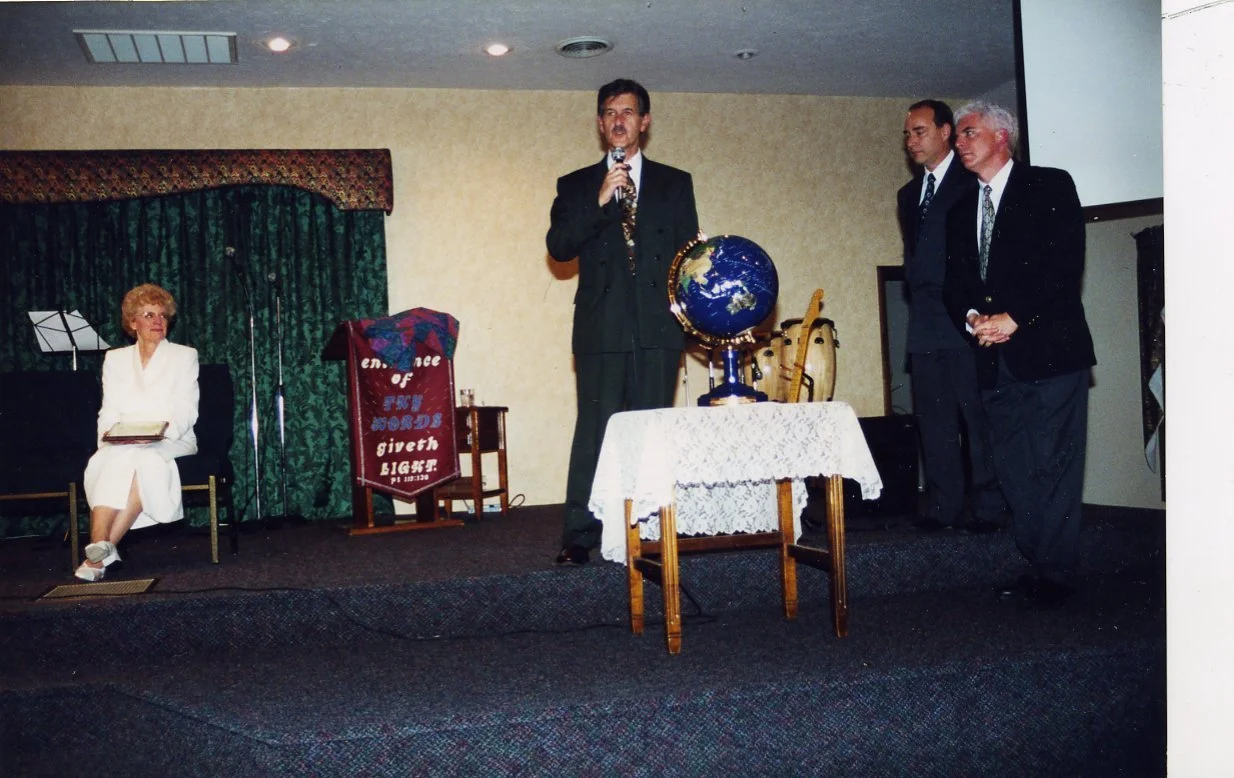
Carol, left, watches John preach, middle, during a service at Christ Community Church.
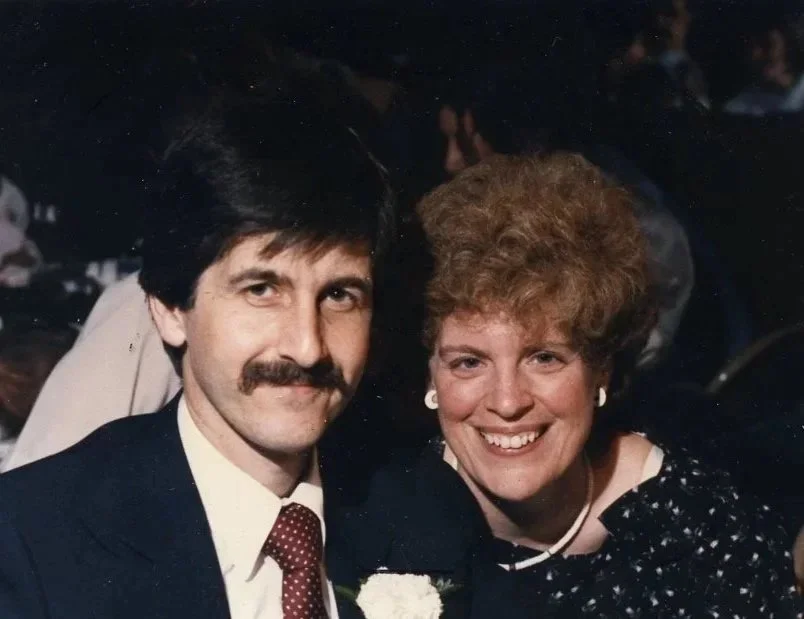
John and Carol at an event.
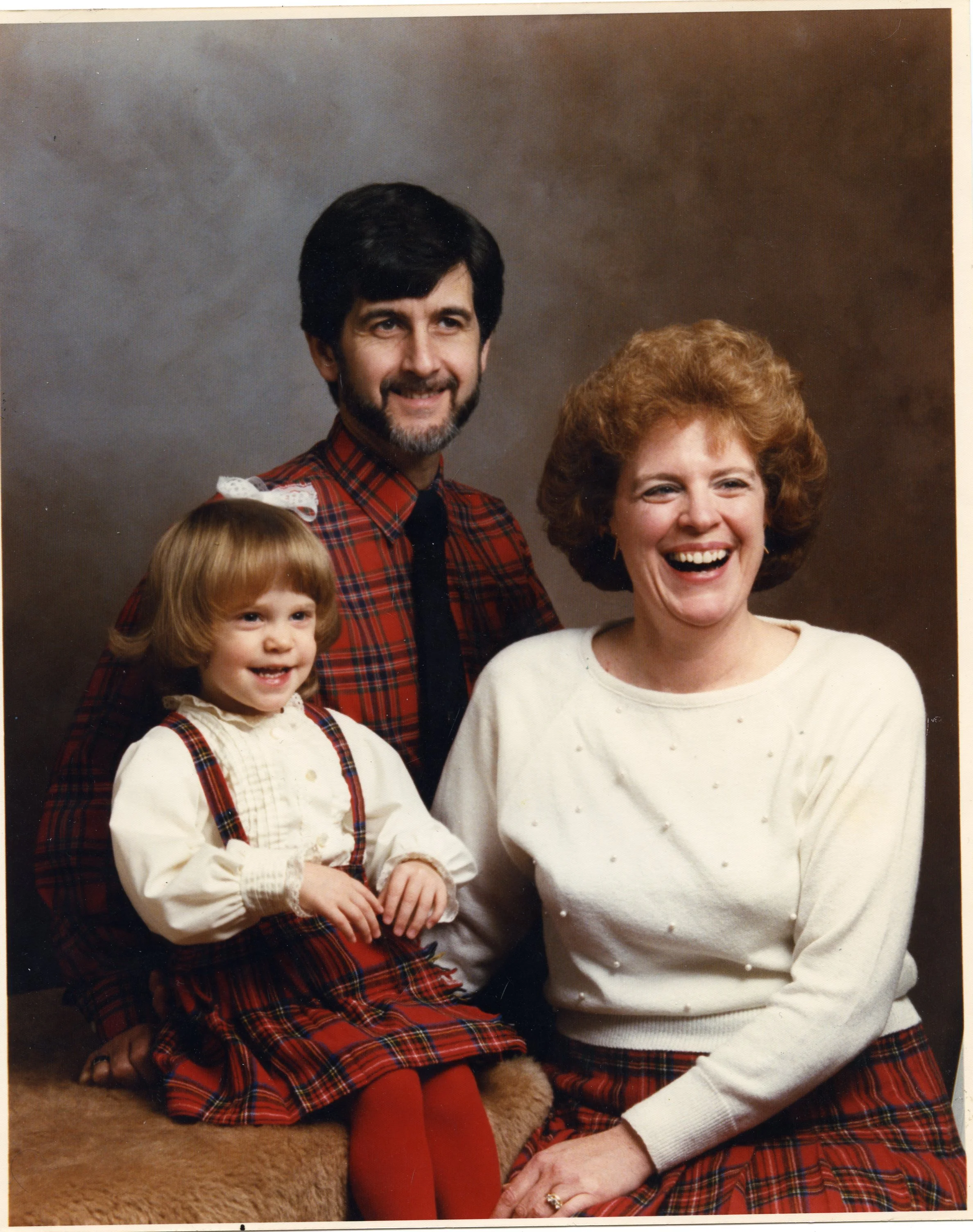
John, Meg, and Carol sit for a family portrait.
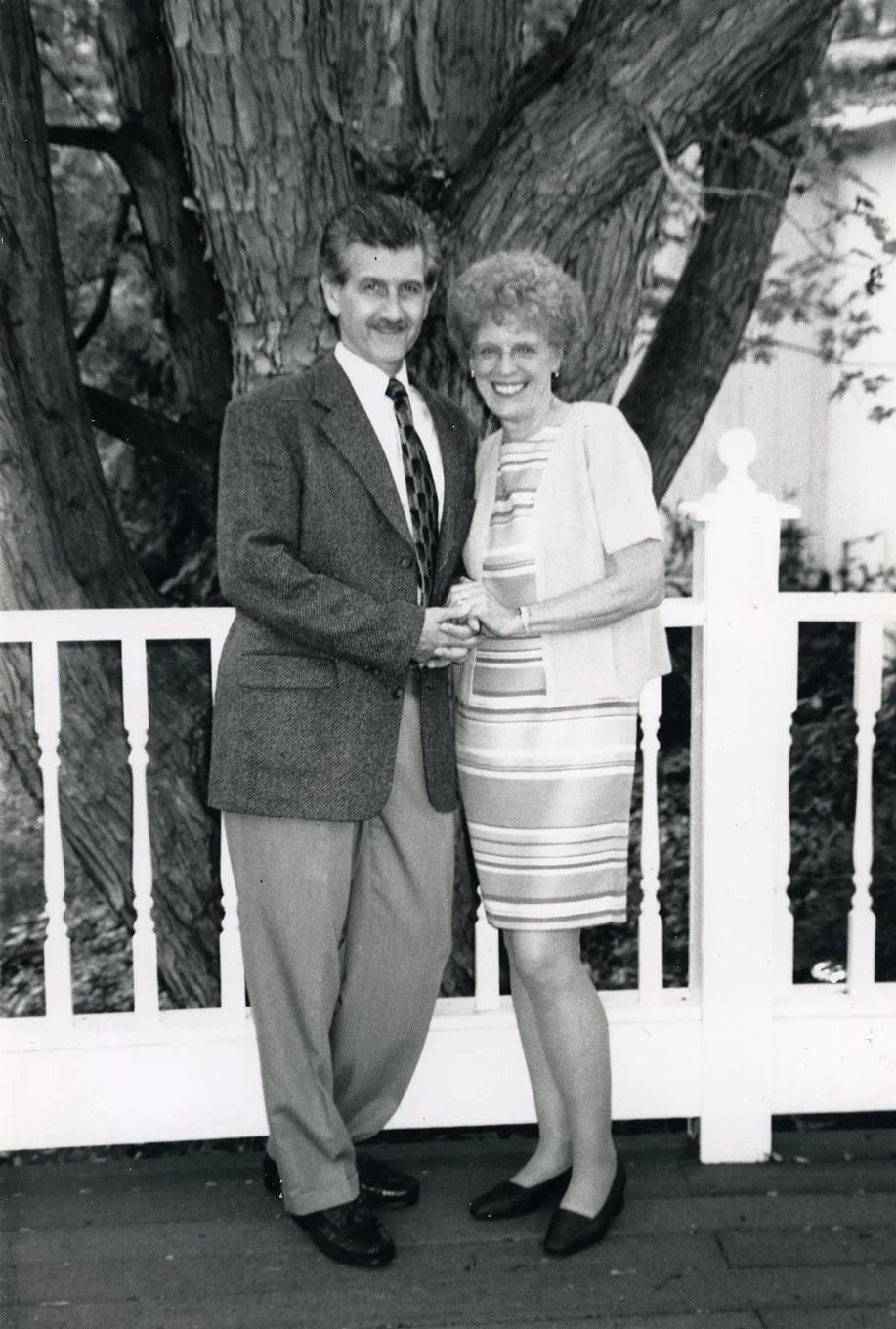
John and Carol at a wedding.
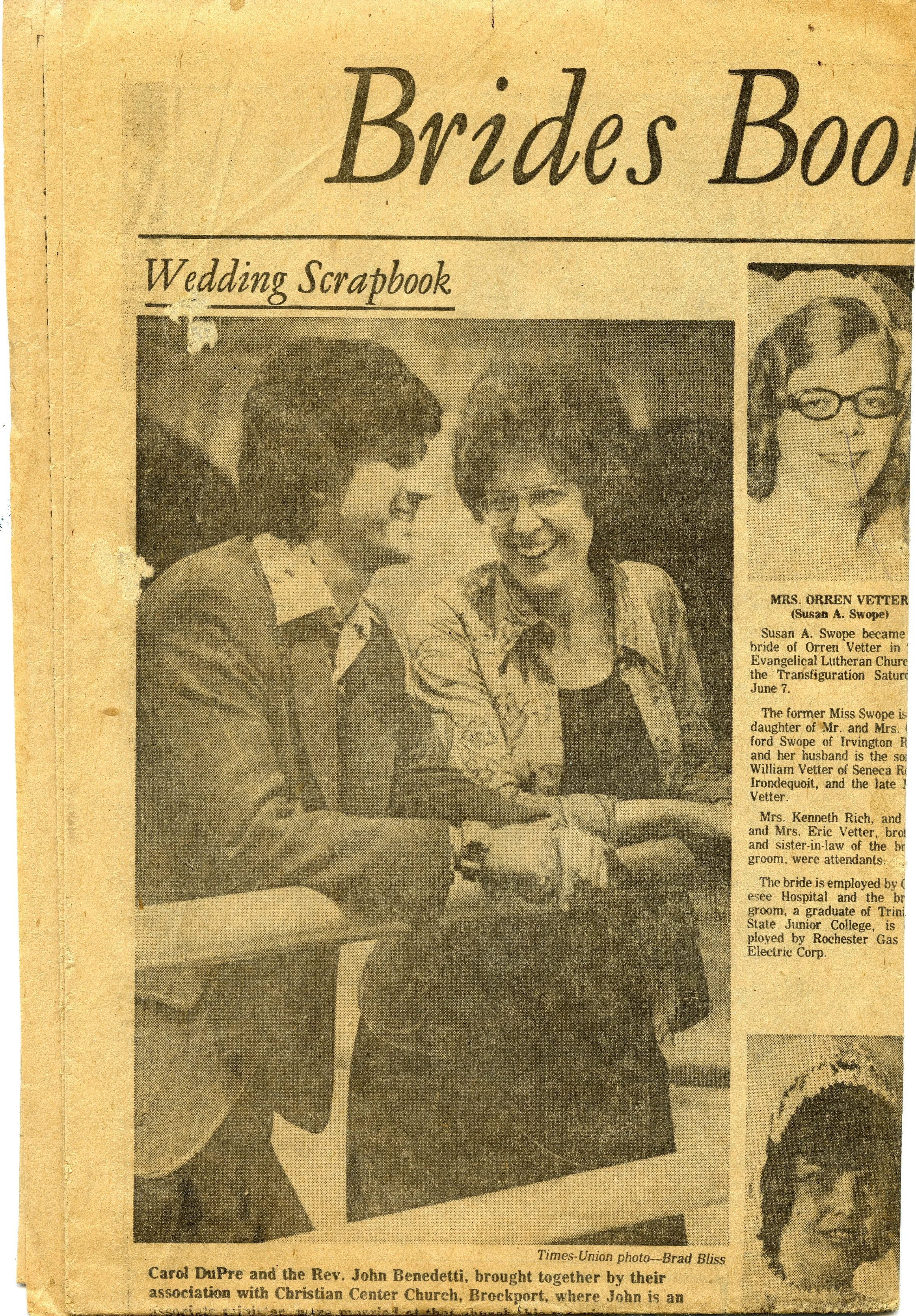
A newspaper clipping of the "Brides Book" accountant of Carol and John's newlywed marriage.
John’s behavior became increasingly controlling, over the course of their 30-year marriage. Carol describes their relationship as “legalistic…a manipulation of the scripture to control people.” John “shamed” her by recording cassette tapes about her behavior when she was too boisterous, leaving them for her to hear and correct. He read her diary, making copies of its pages, and sharing them with church elders to paint her as disturbed. Carol says, when he started “quoting things he had read, I knew that he either got it from my journal or from an email that I sent out.” When he later filed for divorce, he would cite the diary entries as his evidence for “cruel and inhumane treatment.”
Carol points to her calendar, each circled event is a doctor’s appointment.
Margaret, who goes by Meg, estranged herself from Carol the week of her 21st birthday after John filed for divorce. For five years, they had no contact. Carol describes it as one of the worst times in her life. Though they eventually reconnected in 2009, the fracture remains part of their history.
Carol’s brother, Mark, also distanced himself, accusing her of exaggerating the realities of her marriage. Their relationship has yet to recover.
left- Carol cleans up the leftovers from Christmas dinner while Meg’s dog Twinkles searches for scraps; right- Meg shows Carol a Facebook recipe on her phone on Christmas Day, Meg and her daughter, Maya, usually visit twice a year— 4th of July and Christmas.
Dupré’s closet is still rife with the memories of the court case, “my closet looks like a cave,” she says. As she finds the chapter of the court case closing, she begins to introduce more color.
Click here to read more about the case
Carol says that bonding with the other survivors has become a huge part of her life. She has grown close with a handful of them who reached out to her with constant phone calls during and after the case. One of them, Tony, thanked Carol after the trial concluded. He told her that would never forget how she “helped him get this (settlement check).”
Counterclockwise from top - Carol watches Lacey drink from her bathroom sink; Carol kisses Lacey on her head; Carol scrolls Facebook while Fox News plays in the background, accompanied by Gunther.
When John divorced Carol 21 years ago, she was devastated “I lost my family, my daughter, my money, my medical coverage, my position, my job, my church, my friends,” she laments.
Carol says does not carry guilt for the dissolution of her marriage with John, but she does carry grief for the loss of her marriage, as well as her relationship with her brother Mark.
While she no longer identifies with any particular denomination, her relationship with John exacerbated the trauma she experienced at the hands of a Catholic bishop as a teenager. Despite everything she’s endured, she is careful to separate her faith from the men who harmed her.
Her faith, rather than diminishing, has become the framework through which she processes the sum of all she has endured.
“None of these things are God’s fault. They are the fault of the free man.”
Counterclockwise from top - Carol puts an apple in her shopping cart during her weekly grocery run; Carol tugs at her turtleneck while driving home from CVS; Carol grabs her mail from her car after grocery shopping.
Around 2017, Carol saw a TV commercial encouraging survivors of clergy sexual abuse to call a hotline and decided to use it. For two years before the court case officially began, she filled out dozens of forms and answered countless questions. In 2019, she was assigned well-known clergy sexual abuse lawyer Mitchell Garabedian to represent her, and the case officially began.
A few months into the case, after being chosen by her lawyer, Carol was interviewed by a representative from the state of New York to become part of the committee that would represent the case. Carol was selected, and from there became one of nine central figures in a six-year court case against the Rochester Catholic Diocese. Throughout most of the court hearings, Carol wore black as a form of mourning. The case ended in late 2025 with a $246 million bankruptcy settlement, to be divided by 475 survivors in the suit.
On the day the case closed, she wore white to signal a new beginning. “If you asked me a few years ago if I would do it again I wouldn't, but now I would,” she says about the court case. The seemingly never ending nature of the trial was agonizing to Carol during the case; but now, knowing how the case ends and the bonds she has made with other survivors, she knows it was worth it.
Counterclockwise from top - Lacey sits in Carols lap while Carol pets her, Carol’s hand is adorned with a bandaged after a visit to the hospital to remove a growth; Carol prepares her morning medications; Carol plods up the steps from her basement after cleaning her cats litter boxes.
It hasn’t all been easy. The court case added more stress on Carol, the length of the case further deteriorating her health. Tasks that once felt insignificant, like going down the basement stairs to clean the litter box, now require effort and caution. Six years of reliving the agony of her abuse and sitting through the motions of the justice system has been trying, but she cites her faith as her source of strength.
"I am aware of Him, when I wake up, and even when I’m afraid.”
Carol cleans up her kitchen after dinner, shown through the reflection of a mirror in her hallway.
In the 21 years following the dissolution of her marriage, Carol has rebuilt a small but intentional community: Her weekly ladies meetings; connections with fellow survivors, and, especially, a handful of trusted friends and their husbands who help her with tasks around the house. She jokingly calls them her “rent-a-husbands”.
Carol continues to rebuild her community, carefully and deliberately, her faith always there to support.
Now, Carol awaits her settlement check, a long-anticipated finale to an arduous court case. She imagines small, tangible luxuries: updating her kitchen, helping Meg pay off debt, and buying the home she lives in back from a reverse mortgage.
While Carol often reflects on the past, and theorizes about the uncertainty of her future with her family, her health, and even her death, she is certain of one thing: God is with her.
Carol watches one of her favorite shows ,“Bull,” after dinner.